Arquivo Histórico Ultramarino
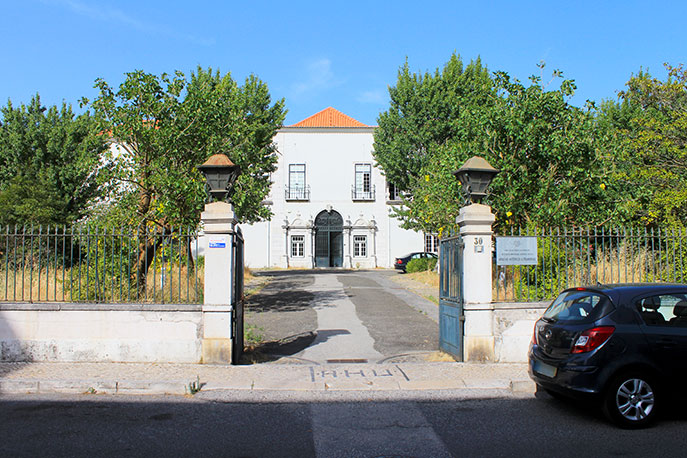
Established in 1931 as the Arquivo Histórico Colonial under Portugal’s Ministry of Colonies, the institution—renamed the Arquivo Histórico Ultramarino (AHU) in 1951—was designed to centralize, catalog, and preserve documents spanning centuries of Portuguese imperial history. Set against the backdrop of the Salazarist Estado Novo regime, the archive served as a central instrument for state-driven heritage building, providing the administrative and historical infrastructure necessary to project and centralize imperial power from Lisbon.
Despite its grand mandate to unify all colonial records under one roof at the Palace of Ega, the institution faced immediate administrative hurdles. Its creation sparked intense jurisdictional rivalries with established cultural bodies, including the Biblioteca Nacional de Lisboa and the Arquivo Nacional da Torre do Tombo, over the rightful ownership of vital historical collections such as the Conselho Ultramarino papers. Managing document flows across vast oceanic distances posed additional administrative complexities, prompting the archive to adopt emerging technologies like microfilming to bridge gaps where original records were retained overseas or lost.
Throughout the tenure of leadership figures such as Manuel Múrias and Alberto Iria, the institution perpetually struggled with spatial shortages and an overwhelming influx of modern bureaucracy. These physical constraints forced ongoing internal debates over what fundamentally constituted a historical document versus a modern administrative record. Ultimately, the AHU functioned as a vital pillar of the metropolitan imperial state, continually balancing the need for scholarly access against the regime's strict impulses for centralized control.