Biblioteca Pública de Évora
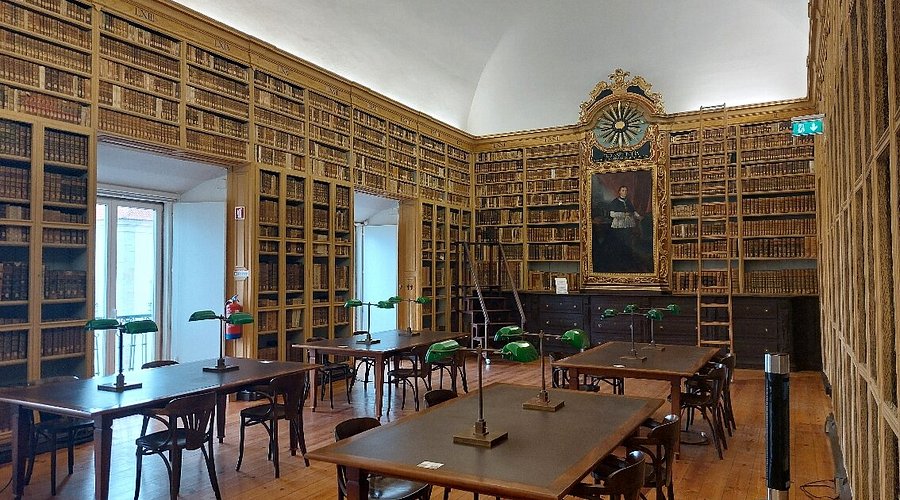
The Évora Public Library) located in the historic Alentejo region of Portugal, is one of the nation's oldest, richest, and most prestigious cultural institutions. Founded in 1805 by Archbishop D. Frei Manuel do Cenáculo—a prominent figure of the Portuguese Enlightenment—the library was established to foster public knowledge and education. Archbishop Cenáculo laid the institution's groundwork by donating his own monumental collection of roughly 50,000 books. The library is housed in a building steeped in its own historic significance. Constructed in 1656 on the remnants of Évora's ancient castle, the structure originally served as the *Colégio dos Moços do Coro da Sé* (a college for the cathedral's choir boys). Today, the library holds an extraordinary collection that has grown to over one million volumes. It is celebrated for its rare and priceless treasures, including 664 incunabula (books printed before 1501), more than 6,400 printed works from the 16th century, and extensive collections of historical manuscripts, cartography, and antique musical scores. Its rapid growth over the past century was heavily accelerated by its designation as a recipient of the *Depósito Legal* (Legal Deposit) in 1931, requiring Portuguese publishers to send copies of all new publications to the repository. Successfully bridging centuries of intellectual heritage with the digital era, the library modernized its services for its bicentennial in 2005 by launching its first online public catalog. It remains a vital pillar of research, preservation, and community education within a UNESCO World Heritage city.